
Listen: the 1990s were a magical time. The economy was booming, the internet was making its way into American homes, and Hollywood was swimming in so much money that television executives apparently started approving shows by throwing darts at a wall covered in cocaine.
I mean, how else do you explain some of this stuff?
I’ve already covered 10 Garbage TV Shows From The 1990s, including such baffling cultural achievements as Cop Rock, Fish Police, and Homeboys in Outer Space. You’d think that would exhaust the supply of stupid television from the decade, but you’d be wrong. Spectacularly wrong.
For every Seinfeld, The X-Files, or The Simpsons, there were approximately 47 shows about a talking animal, an alien living with a suburban family, or some guy who used to be famous in 1983 trying desperately to remain famous in 1996.
And the networks kept making them! Hundreds of thousands of dollars per episode, actors under contract, entire soundstages built, and some poor bastard assigned to explain why America needed a sitcom about a former president’s ghost or a crime-fighting saxophone player.
So let’s return to the 1990s, when television was free, commercials were plentiful, and the people responsible for programming our evenings were apparently unsupervised.
Previously: 10 Garbage TV Shows From The 1990s.
1. Meego (1997)

Remember ALF? A furry alien crashes into a suburban family’s garage, moves in, and spends four seasons threatening to eat their cat. An enormous hit because, well, it was the ’80s and we didn’t have the internet yet.
Now suppose you wanted to remake ALF for the ’90s. You could hire writers to create an interesting new extraterrestrial character. Or you could put Bronson Pinchot in a silver jumpsuit.
That’s Meego. Pinchot, best known for playing Balki on Perfect Strangers, stars as an alien who crash-lands on Earth and becomes a nanny to three children. He’s got magical powers, strange customs, and the ability to behave like Bronson Pinchot for 22 minutes at a time.
So it’s ALF meets Mary Poppins, only without the puppet or Julie Andrews. And what the hell is a Meego, anyway? His name? His species? Are there millions of Meegos on his planet, all doing funny voices and getting into misunderstandings with American children?
CBS aired only a handful of episodes before sending Meego back to whatever godforsaken planet he’d come from. Perhaps he and ALF are hanging out somewhere in the universe, talking about how American television stopped returning their calls.
2. The Bradys (1990)
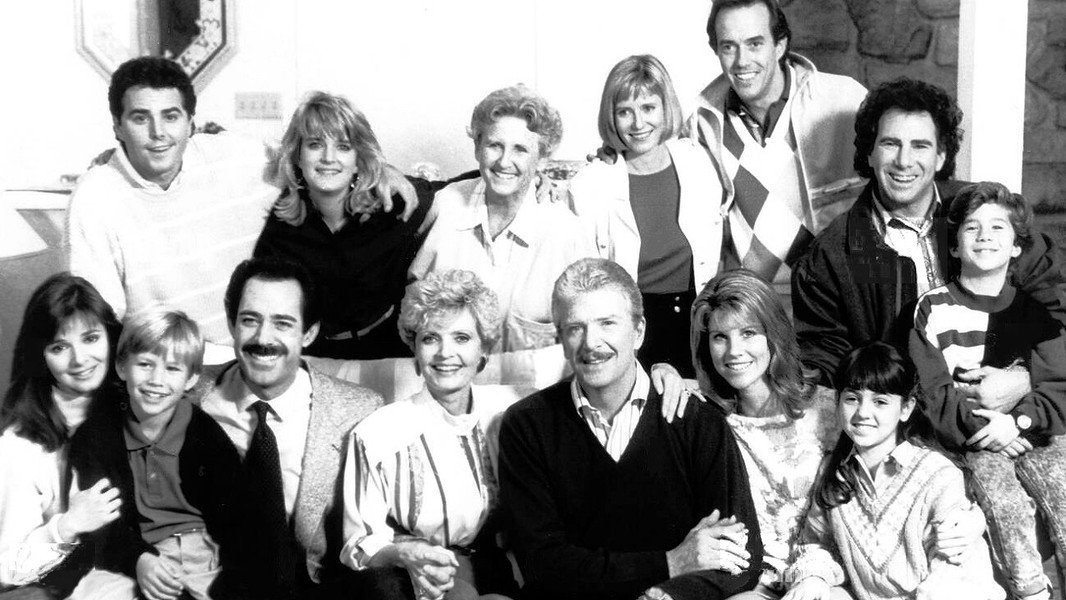
The Brady Bunch was a pleasant sitcom about a blended family living in an impossibly large suburban house. It somehow convinced an entire generation that six children could share one bathroom without murdering each other.
By 1990 the Brady kids were adults. So what do you do with a family sitcom about children when the children are all grown up? Why, turn it into a serious family drama!
The Bradys brought the famous family back to deal with alcoholism, marital problems, career struggles, and a racing accident that leaves Bobby Brady paralyzed.
Wait. WHAT?
I can only imagine the pitch meeting. “America loves the Brady family!” “Absolutely!” “So let’s put Bobby in a wheelchair!”
This is like bringing back Gilligan’s Island as a gritty survival drama in which the Professor develops a heroin addiction and the Skipper gets diagnosed with terminal cancer.
The show even ran for an hour, because apparently a half-hour wasn’t enough time to explore the psychological trauma of growing up Brady. It lasted six episodes. Somewhere, Alice the housekeeper was probably grateful she’d gotten out before things turned ugly.
3. The 100 Lives of Black Jack Savage (1991)

Here’s a premise that sounds like somebody made it up during a particularly aggressive game of Mad Libs.
A Wall Street millionaire flees to a Caribbean island to escape the law, where he discovers that his castle is haunted by the ghost of a 17th-century pirate named Black Jack Savage.
Already, we’ve got a show. But wait! The pirate is cursed and must save 100 lives to avoid eternal damnation. The millionaire also needs to redeem himself. So the two team up to rescue people using a futuristic high-speed boat.
A futuristic high-speed boat. Because obviously.
This Disney-produced NBC adventure somehow combined The Ghost and Mrs. Muir, Miami Vice, Knight Rider, and a Caribbean tourism commercial into one television program.
Why does a pirate ghost need a Wall Street millionaire to help him save people? Couldn’t he haunt a hospital and warn patients when their IV bags were running low? He’d knock out those 100 lives in a weekend. And couldn’t the millionaire just donate his money to charity?
No, no. That would be too easy. We need the boat.
The show lasted only a handful of episodes before Black Jack Savage apparently decided eternal damnation was preferable to another season on NBC.
4. Ferris Bueller (1990)

Ferris Bueller’s Day Off is one of the defining teen comedies of the 1980s. Matthew Broderick plays a charming, manipulative high school student who skips school, steals a Ferrari, crashes a parade, and makes every adult in Chicago look like an idiot.
It’s a terrific movie. And like most terrific movies, it has absolutely no reason to become a weekly television series. But NBC disagreed.
In 1990 the network introduced Ferris Bueller, starring Charlie Schlatter, with Jennifer Aniston playing his sister Jeannie. Yes, that Jennifer Aniston. Before Friends she was stuck in the Bueller household wondering why nobody would let her have a decent television career.
The show tried to recreate Ferris’s fourth-wall-breaking antics, but there’s a fundamental problem: Ferris works because he’s a charming little bastard who gets away with everything for one glorious day. Now imagine that guy pulling the same crap every week.
After three episodes you’d stop rooting for him and start hoping Principal Rooney caught him and threw his ass in detention until graduation. How many days off can Ferris possibly take before the school district sends somebody to his house?
The show lasted 13 episodes, proving Ferris Bueller’s day off should have remained exactly that: a day.
5. Baywatch Nights (1995)

Baywatch was one of the most successful television shows in the world. Attractive people ran around beaches in slow motion, occasionally rescuing swimmers, while David Hasselhoff stood around looking concerned. It wasn’t Masterpiece Theatre, but it knew what it was.
Then somebody decided the world needed a Baywatch spinoff. More lifeguards? Another beach? A show about the people who clean the sand after everyone goes home?
Nope. David Hasselhoff becomes a private detective. At night.
Thus was born Baywatch Nights, in which Mitch Buchannon, apparently dissatisfied with saving lives during daylight hours, begins investigating crimes after sunset.
But it gets better! When the private detective angle failed to attract enough viewers, the second season veered into supernatural territory, with Mitch investigating monsters, aliens, and paranormal phenomena. So now it’s Baywatch meets The X-Files.
Imagine being a lifeguard all day, rescuing idiots who swim past warning flags, then spending your evenings fighting some ancient demon beneath Santa Monica. When does this guy sleep?
And what happens if a sea monster attacks at noon? Is Mitch on lifeguard duty or paranormal investigator duty? Does he have to clock out before confronting the creature?
Baywatch Nights lasted two seasons, which is approximately two seasons longer than any show about David Hasselhoff investigating supernatural mysteries should have lasted.
6. The Watcher (1995)

By the mid-1990s, executives knew audiences liked sexy people, suspenseful stories, and a vaguely mysterious atmosphere. So somebody combined all three into an anthology series hosted by Sir Mix-a-Lot.
Yes. Sir Mix-a-Lot. The man responsible for Baby Got Back.
The Watcher aired on UPN in 1995 and featured stories about relationships, obsession, romance, and other adult situations, with Sir Mix-a-Lot as a mysterious observer.
Who better to guide us through the complexities of human desire than the guy who informed America he liked big butts and could not lie?
Imagine The Twilight Zone hosted by Vanilla Ice. “You’re about to enter another dimension. A dimension not only of sight and sound, but of ice, ice, baby.”
Or Alfred Hitchcock Presents hosted by MC Hammer. “Good evening. You can’t touch this.”
What the hell was UPN thinking? Sir Mix-a-Lot was a rapper with an enormous novelty hit a few years earlier. Apparently that qualified him as America’s new Rod Serling.
The show disappeared after one season, leaving a question nobody has satisfactorily answered: Why?
7. George (1993)

George Foreman is a fascinating guy: heavyweight boxing champion, Olympic gold medalist, successful businessman, and one of the greatest celebrity product endorsers of all time. He also has approximately 47 children named George.
Okay, five sons named George, but still.
Anyway, in 1993 ABC decided America needed a sitcom starring George Foreman. Not a documentary about boxing. Not a sports program. Not even a cooking show, which would at least have made sense considering the grill empire he was about to unleash upon the nation.
A sitcom.
In George, Foreman plays a former boxer running an after-school program for troubled kids. And you know what? That’s a wholesome idea.
The problem is George Foreman is not an actor. He’s George Foreman. It’s like watching your uncle attempt community theater Diff’rent Strokes while everyone politely pretends he’s doing a terrific job.
Foreman has charisma. The guy sold millions of countertop grills by smiling at people and telling them they could cook hamburgers without all that pesky fat. But carrying a network sitcom is a different business from knocking out Joe Frazier.
The show lasted nine episodes. A few years later the George Foreman Grill became an enormous success, proving America was perfectly happy to invite Foreman into its living rooms—as long as he was attached to a heating element.
8. Team Knight Rider (1997)

Remember Knight Rider? David Hasselhoff drove a talking Pontiac Trans Am around solving crimes with an artificially intelligent computer named KITT. It was stupid, sure, but it was good stupid.
One guy, one talking car, and a theme song that sounded like the future arriving in a leather jacket. Simple.
But by 1997 somebody decided one talking car wasn’t enough. We needed FIVE.
Team Knight Rider follows crime fighters operating a fleet of artificially intelligent vehicles, each with its own personality. A sports car, an SUV, a motorcycle, a truck, and another car. All of them talk.
So instead of Hasselhoff arguing with one sarcastic Pontiac, we’ve got a bunch of people arguing with an entire used-car lot.
Why would an international crime-fighting organization spend millions developing artificial intelligence for a motorcycle? What’s the motorcycle going to do, offer relationship advice while you’re leaning into a turn?
“Dave, I really think you should call your mother.”
“NOT NOW, MOTORCYCLE! WE’RE BEING SHOT AT!”
The show lasted one season before somebody remembered Knight Rider was popular because of KITT and David Hasselhoff, not because audiences were desperate to watch a Ford dealership achieve consciousness.
9. NightMan (1997)

Here’s another one that sounds invented by somebody who had never watched a superhero show but had heard a few things about them.
Johnny Domino is a jazz saxophonist who gets struck by lightning. Okay. As a result, he gains the ability to detect evil thoughts. Sure. He then becomes a costumed superhero named NightMan, wearing a special suit that allows him to fly, become invisible, and shoot lasers.
Wait a minute. What does any of this have to do with playing the saxophone?
Why is a jazz musician fighting crime? Why does lightning let him sense evil? And if the suit is responsible for all the cool powers, what the hell did the lightning actually accomplish?
This is like getting bitten by a radioactive spider, then buying a tank and calling yourself Spider-Man.
Based on a Malibu Comics character, NightMan ran in syndication for two seasons. It also featured guest appearances by people like Little Richard, because apparently producers wanted to make sure we never forgot our superhero was, first and foremost, a musician.
Imagine Batman interrupting a fight with the Joker to perform a smooth jazz solo.
“Hold on, Joker. This one’s in B-flat.”
There are plenty of terrible superhero shows, but NightMan has the distinction of an origin story that sounds like the opening act of a Kenny G concert gone horribly wrong.
10. Shasta McNasty (1999)

By the end of the 1990s, American culture was becoming increasingly obnoxious. Boy bands were everywhere. Limp Bizkit was selling millions of albums. MTV was turning into a nonstop parade of young people behaving like jackasses.
And UPN, ever the cultural visionary, made a sitcom that captured the spirit of the times: Shasta McNasty.
The show follows three young guys in a fictional hip-hop/rock group who live together in Los Angeles and get into wacky adventures. That’s it. That’s the show.
It’s like somebody took a Mountain Dew commercial, stretched it to 22 minutes, and added a laugh track.
The title alone is enough to make you want to travel back to 1999 and slap somebody. Shasta McNasty. Who the hell approved that?
Was Radical Dudez Extreme already taken? Did somebody own the rights to Totally Phat Broz?
The show was later shortened to Shasta, presumably after the network realized having the word McNasty in the title wasn’t attracting the sophisticated television audience they’d hoped for.
It lasted one season. And with that, the 1990s finally came to an end, taking with them frosted tips, JNCO jeans, and the apparently limitless supply of network executives willing to spend millions on shows that sounded like rejected Saturday Night Live sketches.
The End of an Era (Thank God)
The 1990s gave us some of the greatest television ever made. But it also gave us Meego, Team Knight Rider, and a show in which a saxophone player fought crime after getting struck by lightning.
Somewhere, at some point, a room full of educated, highly paid professionals listened to these pitches, nodded thoughtfully, and said, “Yes. America needs this.”
They hired actors. Built sets. Shot episodes. Purchased advertising. Held meetings about ratings projections and audience demographics. Then, a few weeks later, canceled the whole damn thing.
Millions spent. Hundreds employed. All so America could briefly experience the thrill of watching a talking motorcycle argue with its driver.
What a wonderful decade. And the best part? There are still more of these shows out there.
God help us all.


Leave a Reply