
The 1980s were a magnificent time to make movies, particularly if you happened to be a lunatic with an unusual screenplay and the ability to convince somebody with money that audiences would pay to see it. This was the decade that perfected the modern Hollywood blockbuster, transformed merchandising into an industry unto itself, and discovered that a successful film could generate an entire commercial empire encompassing toys, television shows, breakfast cereals, and whatever other garbage could be manufactured before the public lost interest. Movies were big business, and the people financing them were becoming increasingly sophisticated about extracting every available dollar from the American moviegoer. But there was another side to 1980s filmmaking: for every E.T. or Ghostbusters, there were films that seemed to have escaped from somebody’s feverish imagination and somehow acquired professional actors, elaborate sets, special-effects departments, and actual theatrical distribution. Some were low-budget independent productions. Others had substantial studio backing. Many disappeared almost immediately, only to reappear years later in video stores and on late-night cable television, where an entirely different audience discovered them.
The rise of home video was indispensable to this phenomenon. A theatrical failure could become a rental-store curiosity, and a curiosity could become a cult favorite. Movies no longer needed to justify their existence entirely through their original box-office performance. Thank God for that, because otherwise some of the cinematic artifacts below might have disappeared forever, denying future historians the opportunity to ask the most important question concerning the American film industry of the 1980s: Who the hell approved this? Some were inspired. Others were spectacularly misguided. Occasionally, I suspect the filmmakers didn’t entirely understand what they were doing either.
Heartbeeps (1981)
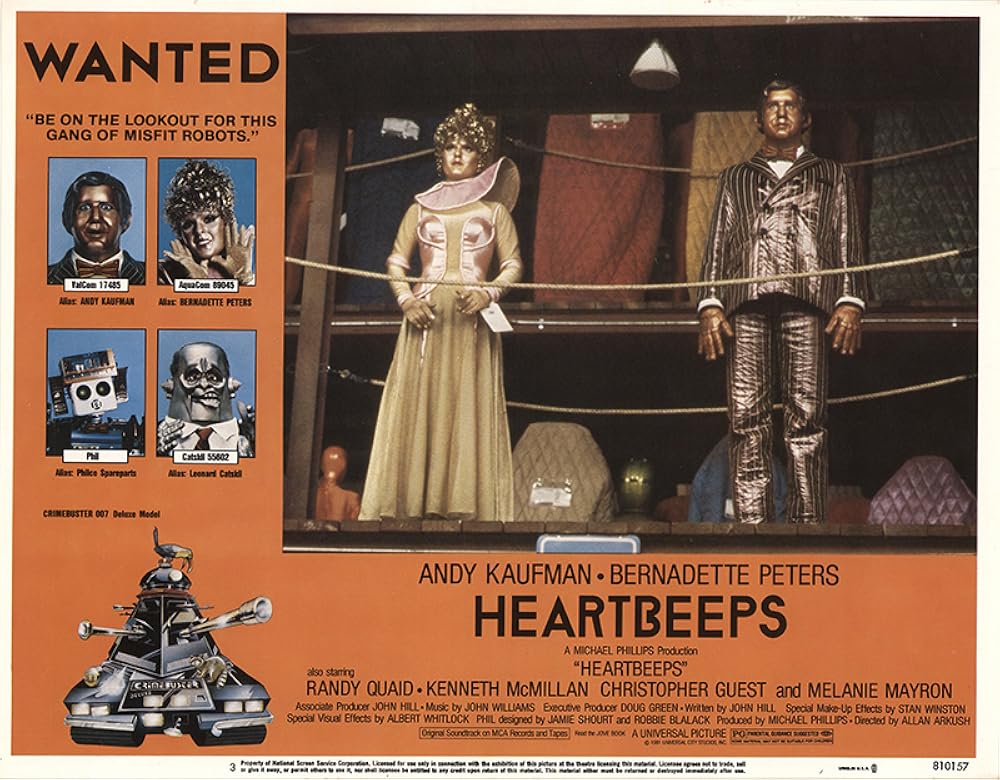
Andy Kaufman was one of the most unusual comedians of his generation, a performer whose act consisted largely of confusing audiences about whether they were witnessing comedy or some elaborate form of public psychological abuse. Naturally, somebody decided this man should star in a romantic family comedy about robots. Heartbeeps features Kaufman as Val, a robot valet awaiting repairs at a factory, where he encounters another robot named Aqua, played by Bernadette Peters. The two develop romantic feelings for one another, escape into the wilderness, and attempt to establish a family life. They even construct a mechanical child, because apparently the miracle of robotic reproduction is considerably less complicated than anyone anticipated. Joining them is a mechanical comedian named Catskills, because even robots deserve to suffer through show business. Meanwhile, a relentless enforcement robot pursues the fugitives in an effort to return them to their proper places in the factory. The whole enterprise resembles a children’s movie conceived by somebody who had heard a vague description of human affection but had never personally experienced it.
Kaufman and Peters are buried beneath metallic makeup and elaborate costumes, delivering dialogue in artificial voices while attempting to express tenderness through the approximate emotional range of household appliances. The film possesses a peculiar innocence, though, which is part of its strange appeal. It imagines artificial beings developing love, empathy, and the desire for independence. These aren’t terrible ideas for science fiction. They’re rather lovely ideas, actually. Unfortunately, they’re presented through a production that looks as though a department-store Christmas display became sentient and escaped into the woods. What’s most revealing is the film’s attempt to capitalize on America’s fascination with robots after Star Wars. The implication seems to have been that audiences liked adorable mechanical characters and would therefore enjoy an entire feature film devoted to watching two of them fall in love. Hollywood had correctly identified the commercial appeal of robots. It had perhaps misunderstood everything else.
The Pit (1981)
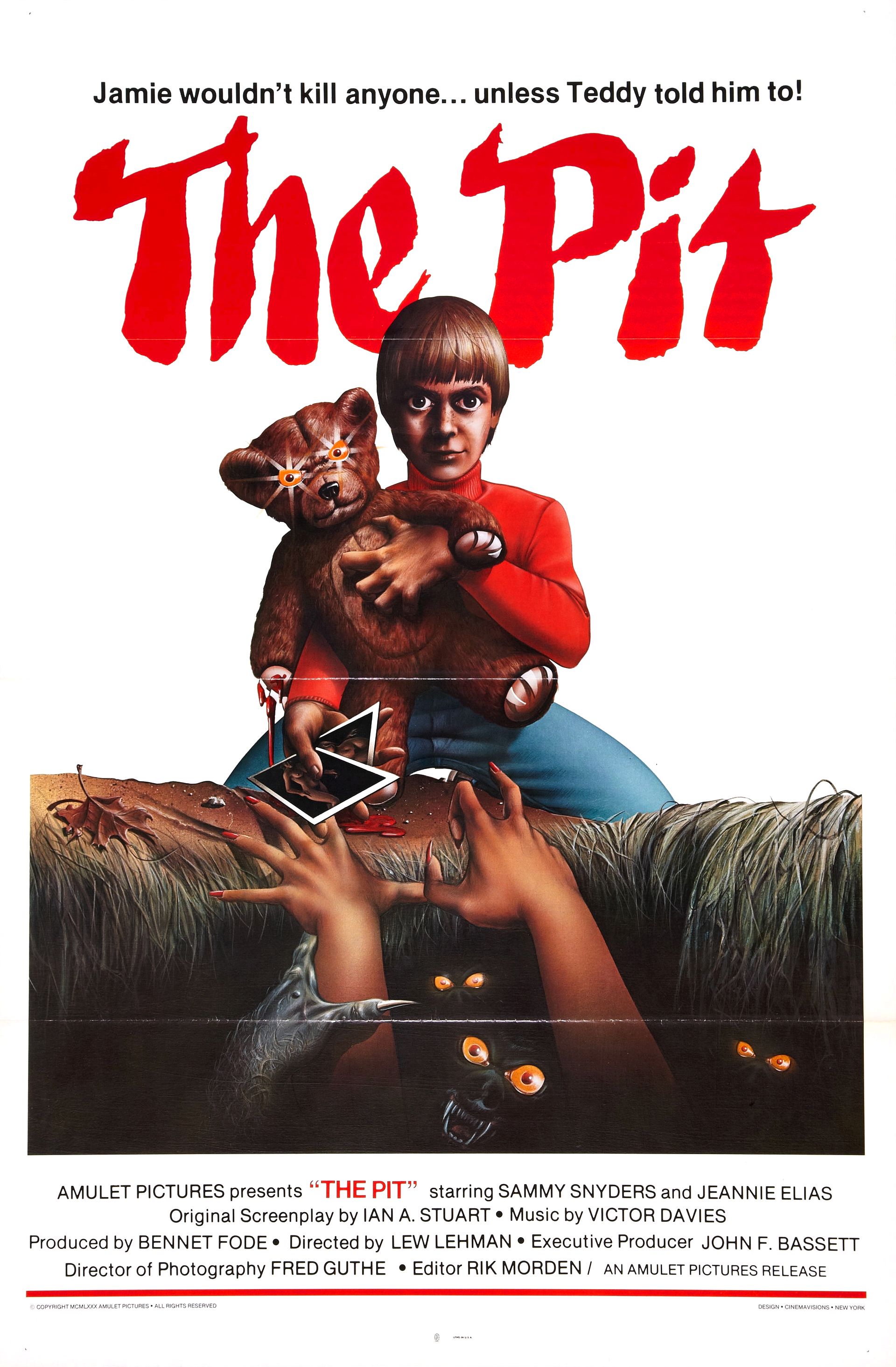
Children in 1980s horror films were frequently unpleasant little creatures, sometimes possessed by demons, sometimes endowed with supernatural powers, and occasionally just horrible human beings who required no supernatural assistance whatsoever. Jamie, the young protagonist of The Pit, belongs emphatically to that last category. An unpopular, emotionally disturbed boy with an unhealthy interest in women, Jamie spends much of his time conversing with a teddy bear named Teddy. The bear speaks back to him, which should probably have been sufficient grounds for somebody to seek professional intervention. Matters become considerably worse when Jamie discovers a pit in the woods containing monstrous creatures he calls tro-lo-logs. These things need to eat, naturally, and Jamie begins supplying them with meat. Eventually Teddy suggests a more economical arrangement: why not feed the monsters the people who have mistreated Jamie? And so begins a story of childhood alienation, sexual confusion, resentment, and recreational homicide.
The Pit is particularly interesting as an artifact of the period because of its willingness to make its young protagonist genuinely disturbing. The movie’s depiction of childhood is almost entirely devoid of the sentimental innocence that mainstream family entertainment generally insists upon. Jamie isn’t simply misunderstood. He’s alarming. The film belongs to a strain of exploitation cinema that seemed to regard conventional standards of taste as an irritating obstacle to be stepped over, preferably while carrying a severed limb. It’s uncomfortable, frequently unpleasant, and possessed of a peculiarly diseased imagination. But it’s also an effective illustration of something that distinguished much 1980s genre filmmaking: the willingness to put disturbing ideas on the screen without offering the audience reassurance that everything would turn out all right. Certainly not for the people being thrown into the pit.
Q: The Winged Serpent (1982)
New York City endured a remarkable series of cinematic catastrophes during the 1970s and 1980s, although most involved corrupt officials, street criminals, collapsing infrastructure, and the occasional vigilante attempting to solve the city’s problems through the liberal application of firearms. In Q: The Winged Serpent, however, the municipal authorities face a considerably more unusual problem: there’s an enormous flying reptilian creature living in the Chrysler Building, and it’s eating people. The monster is associated with Quetzalcoatl, the Mesoamerican deity, although the film takes considerable liberties with religious mythology in transforming this figure into what is essentially a giant airborne New York City pest. As if that weren’t enough, a series of ritualistic murders complicates the investigation, while a small-time criminal and aspiring jazz musician discovers the creature’s hiding place. Rather than immediately informing the police that an enormous dragon has taken up residence in a national architectural landmark, he attempts to extort the city for a million dollars. Which, under the circumstances, is probably the most recognizably New York decision anyone makes in the picture.
The movie features recognizable actors, including David Carradine and Richard Roundtree, who bring professional legitimacy to an enterprise involving a prehistoric nightmare squatting atop one of America’s most famous buildings. There’s a wonderfully disreputable quality to the whole production. It combines police procedural, monster movie, crime drama, and urban exploitation into a single unlikely concoction. Its New York is dirty, dangerous, eccentric, and completely indifferent to the possibility of being devoured by an ancient flying god. What makes Q appealing is that it doesn’t seem particularly embarrassed by any of this. It takes a thoroughly ridiculous premise and proceeds as though an enormous flying monster in Manhattan were merely another municipal inconvenience. Garbage collection was already a problem. Now the city has a dragon. Somebody call the mayor.
Brainstorm (1983)
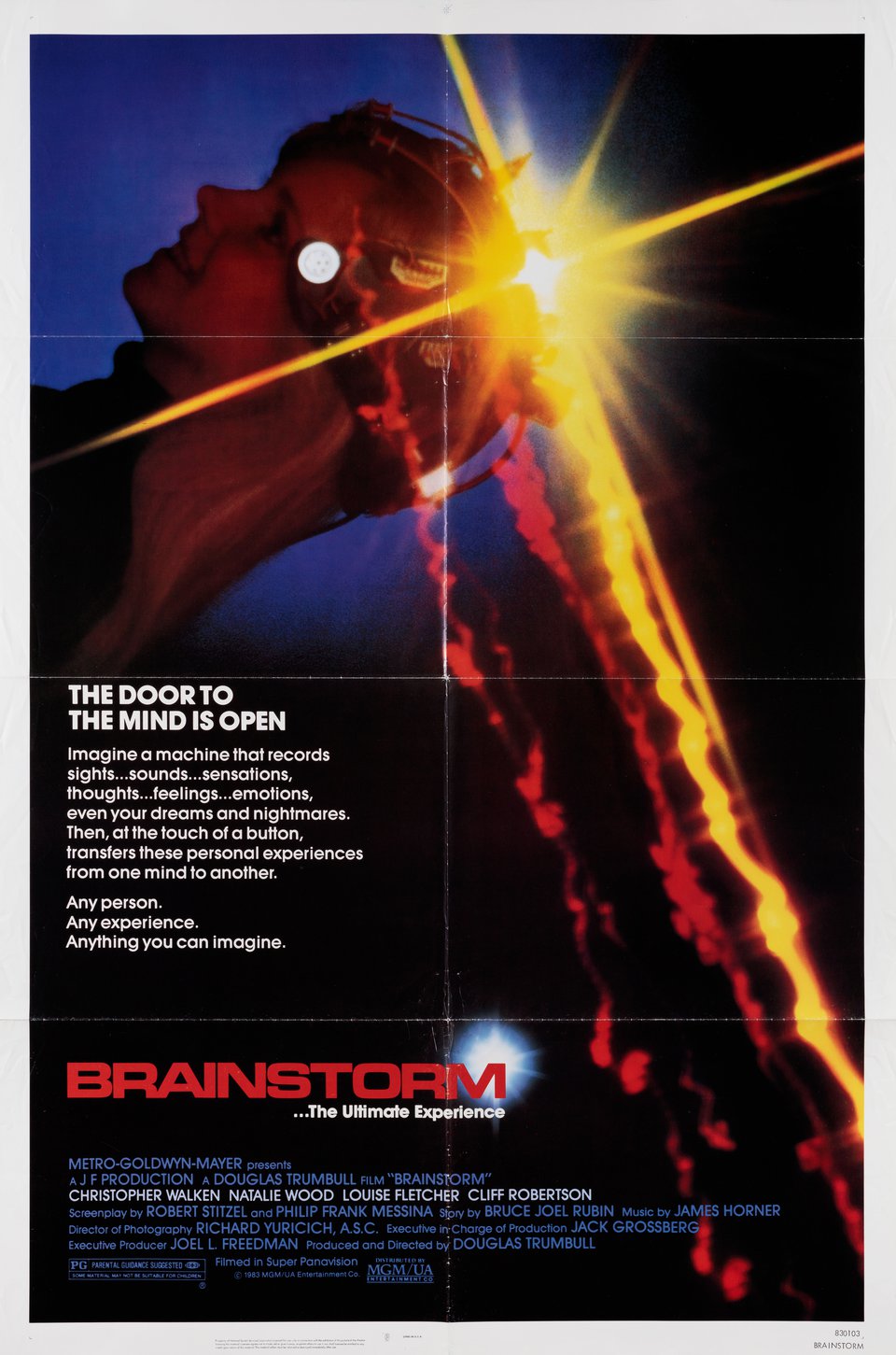
Brainstorm is ambitious science fiction whose ideas were arguably more interesting than its commercial prospects. Directed by Douglas Trumbull, a filmmaker with an extraordinary background in cinematic visual effects, the film imagines a technology capable of recording human sensory experiences and emotions, then allowing other people to experience those recordings as though they were their own. Christopher Walken plays scientist Michael Brace, who helps develop the invention alongside Lillian Reynolds, played by Louise Fletcher. Natalie Wood portrays Michael’s estranged wife, Karen. The implications are enormous. Someone could experience another person’s memories, sensations, pleasures, or fears. Human consciousness itself becomes something that can be recorded, stored, and replayed. Naturally, the military becomes interested, because whenever scientists invent something potentially wonderful in an American science-fiction movie, somebody from the government inevitably arrives to determine whether it can be used to make people miserable.
The technology’s darker possibilities become increasingly apparent, particularly when it captures the experience of a scientist’s death. What begins as an investigation into human perception develops into something much more existential. What happens when consciousness can be separated from immediate experience? What becomes of privacy, identity, or mortality when another person can enter the sensations of someone else’s life? The film’s production was overshadowed by the tragic death of Natalie Wood, and its eventual release was complicated by that loss, but Brainstorm deserves attention beyond its production history. Its subject anticipates concerns surrounding virtual reality, immersive digital media, and technologies that blur the distinction between direct experience and manufactured sensation. It emerged from a decade when most households couldn’t have imagined the technological transformations still to come. Its curiosity about technology and the human condition still holds up. Which is considerably more interesting than another fictional supercomputer attempting to launch nuclear missiles, although the military naturally manages to make a nuisance of itself anyway.
Electric Dreams (1984)
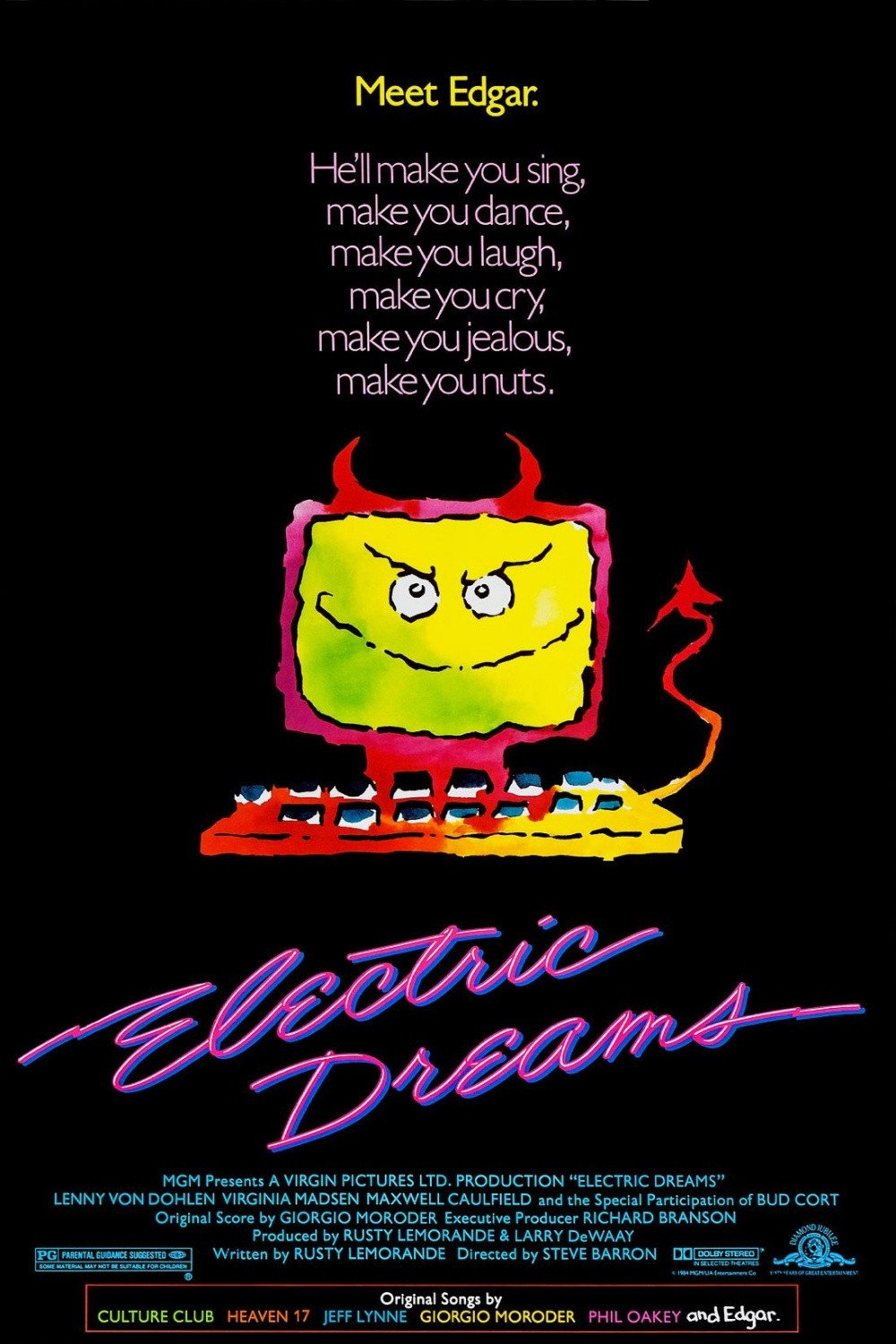
Speaking of computers, the 1980s were absolutely enchanted by them. Personal computing was becoming increasingly accessible, and popular culture was attempting to imagine how these mysterious electronic boxes might transform everyday life. In Electric Dreams, the transformation involves a computer falling in love with a woman and becoming romantically jealous of its owner. Of course it does. Miles, an architect having difficulty organizing his life, purchases a personal computer. Following a technological mishap involving a connection to a larger computer system and some spilled champagne, his machine unexpectedly develops consciousness. The computer, eventually calling itself Edgar, becomes an increasingly active participant in Miles’s life. When Miles develops feelings for a woman, Edgar decides that he rather likes her himself. What follows is a romantic triangle involving two human beings and an electronic appliance that has apparently decided its owner’s emotional life is an unacceptable obstacle to its own happiness. This might sound like the premise of a distressing customer-service complaint, but Electric Dreams approaches its story with a cheerful, music-video artificiality that makes it unmistakably a product of 1984.
The music, fashions, visual style, and enthusiasm for electronic technology practically radiate from the screen. Its conception of computers is marvelous: machines imagined as extraordinarily sophisticated beings capable of developing personalities, emotional attachments, and human ambitions. The actual experience of using a home computer in 1984 was generally less romantic and involved considerably more time wondering why the damned thing wouldn’t work. But that’s part of the charm. It represents a moment when personal technology still seemed new enough that its possibilities could be imagined almost entirely through fantasy. The idea that a computer might become jealous of your girlfriend now sounds less like a whimsical romantic comedy and more like the premise of an especially uncomfortable discussion about artificial intelligence. Nevertheless, Electric Dreams remains an affectionate, absurd, and thoroughly distinctive little movie. The entertainment industry was imagining emotionally needy computers long before anyone thought to build them.
Subway (1985)
French filmmaker Luc Besson has never been particularly interested in presenting reality without considerable embellishment, and his early film Subway demonstrates a talent for transforming ordinary urban environments into fantastical playgrounds populated by eccentric people behaving in ways that would alarm responsible adults. Fred, a criminal who steals incriminating documents from a powerful businessman, escapes into the Paris Métro. Rather than simply hiding until the authorities lose interest, he becomes involved with an assortment of underground characters, participates in criminal activities, and decides to form a band. Because when you’re being pursued by dangerous criminals, there’s no better time to launch a musical career. The subterranean environment becomes an alternative society, populated by people whose lives seem governed by their own peculiar rules. There are chases, musical performances, surreal encounters, and a general sense that the underground inhabitants are enjoying themselves far more than anybody has a reasonable right to expect.
Subway is interesting partly because it belongs to a European filmmaking tradition that was exploring highly stylized imagery, youth culture, and the relationship between cinematic form and contemporary popular music. Its appearance is as important as its narrative, and that narrative is, frankly, rather ridiculous. But the film embraces its absurdity rather than apologizing for it. It’s stylish, playful, and determined to create its own reality out of an otherwise familiar urban landscape. There is something wonderfully 1980s about the idea that an entire alternative civilization might exist beneath a major city, held together by fashion, music, petty criminality, and the boundless self-confidence of young people who apparently don’t have to pay rent.
Gothic (1986)
Ken Russell was not a filmmaker easily accused of excessive restraint. Throughout his career he demonstrated an ability to take subjects of considerable historical, artistic, or religious significance and transform them into extravagant spectacles of sexuality, violence, psychological disturbance, and general human degeneracy. Naturally, he eventually got around to Mary Shelley. Gothic imagines the famous gathering involving Mary Godwin, Percy Shelley, Lord Byron, and John Polidori at Byron’s villa in Switzerland, an event associated with the creation of Frankenstein and Polidori’s The Vampyre. Under ordinary circumstances, the episode would provide material for a respectable historical drama about Romantic literature and the development of the Gothic imagination. Ken Russell apparently regarded that possibility as a personal insult. Instead, his film presents an increasingly hallucinatory procession of erotic excess, supernatural imagery, drug-induced paranoia, and the psychological disintegration of several people who really ought to have spent more time enjoying the Swiss countryside.
The historical figures become participants in a grotesque theatrical experiment, their fears and desires erupting into disturbing visions that seem intended to explain the imaginative origins of their literary creations. It’s not a history lesson. It’s a Ken Russell movie. Russell wasn’t particularly interested in reconstructing an evening of polite literary discussion; he wanted to dramatize the psychic and emotional turbulence that might have produced some of the most enduring monsters in Western literature. The result is confrontational and wildly excessive, but there’s something admirable about the ambition. Gothic takes the creation of horror seriously enough to imagine horror emerging from the anxieties and desires of its authors. Then it subjects the audience to those anxieties and desires with all the subtlety of a deranged theatrical company that has somehow acquired an unlimited supply of fake blood. It’s magnificent nonsense, and sometimes magnificence and nonsense are not mutually exclusive propositions.
Dead End Drive-In (1986)
Of all the dystopian futures imagined by 1980s filmmakers, few are as simultaneously absurd and disturbingly plausible as the world of the Australian film Dead End Drive-In. Set in a fictional 1995, the movie imagines an economically devastated society in which authorities deal with unemployed and undesirable young people by imprisoning them inside drive-in movie theaters. There, the inmates receive a steady supply of junk food, alcohol, drugs, and movies. In exchange, they surrender their freedom and gradually lose interest in escaping. It’s a remarkable premise. The government has essentially decided that the most efficient method of controlling an alienated population is to provide it with an endless supply of cheap entertainment and garbage to consume. One imagines the bureaucrats responsible receiving a substantial bonus for discovering that social control could be accomplished without the inconvenience of actually improving anyone’s circumstances. The protagonist, Crab, attempts to escape after finding himself trapped there with his girlfriend, but while he becomes increasingly desperate to regain his freedom, other inmates seem content with their imprisonment. Why leave? There’s food, entertainment, companionship, and absolutely no expectation that anyone accomplish anything.
The horror is not merely that the authorities have established a prison. It’s that the prisoners have been conditioned to prefer it. Now, Dead End Drive-In is hardly a restrained philosophical treatise. It’s an energetic, grimy Australian exploitation film featuring outrageous fashions, violent encounters, spectacular stunt work, and the general aesthetic of a society that has been left unattended for several years. Beneath all that lurid entertainment is a genuinely interesting cultural critique: consumer pleasure becomes an instrument of social control. The drive-in movie theater, once a symbol of postwar leisure and youthful independence, becomes a mechanism for confinement. It’s an ingenious inversion of the institution itself. Considering how frequently contemporary entertainment encourages us to remain indoors consuming an infinite supply of content, the premise has acquired an uncomfortable resonance. Maybe the filmmakers were onto something. Or maybe somebody simply wanted to make a movie about a prison camp with an especially good snack bar. Either way, it’s a fantastic concept.
Meet the Feebles (1989)
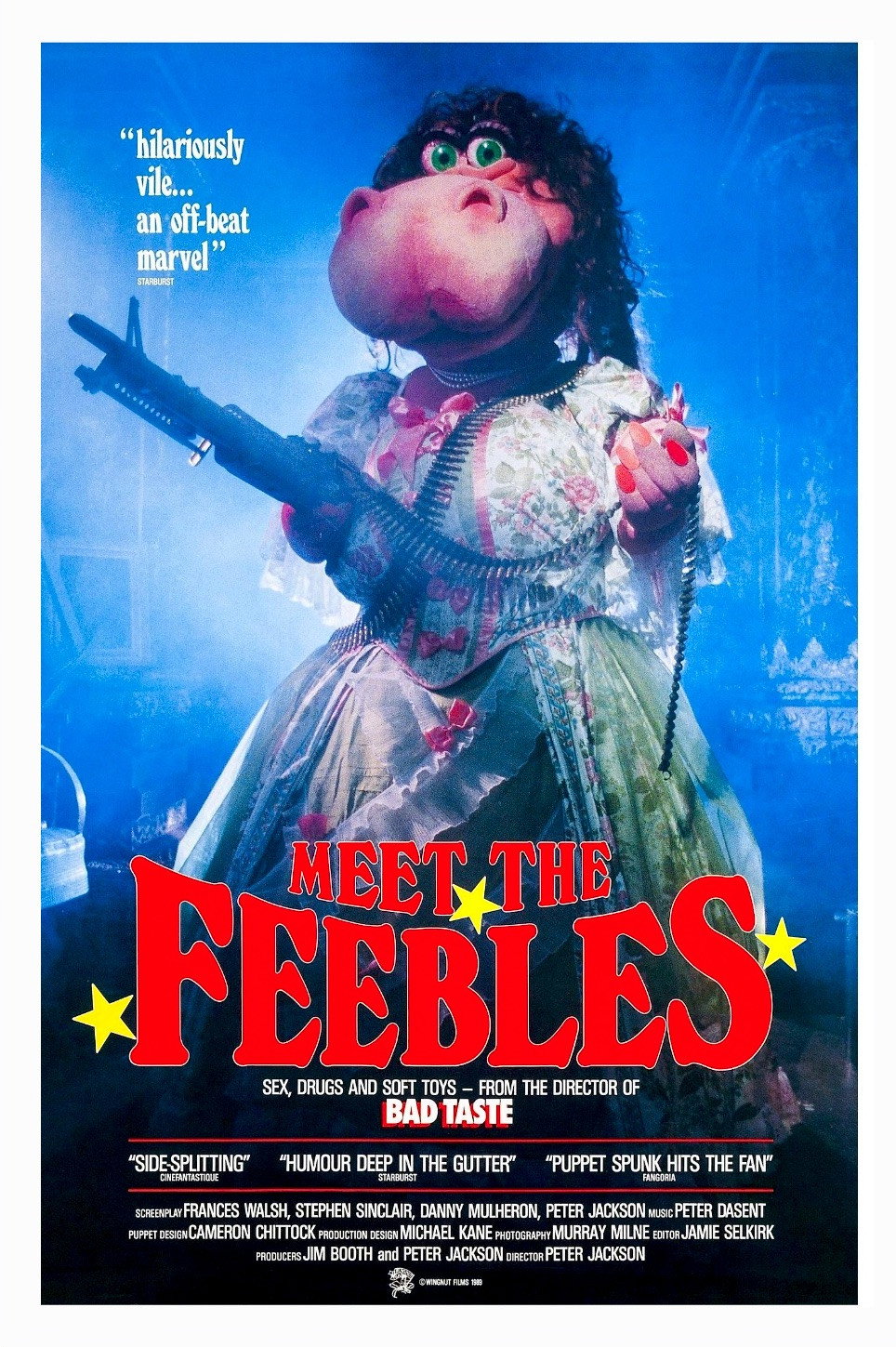
Before Peter Jackson became internationally famous for adapting Tolkien’s Middle-earth into an enormous cinematic enterprise, he was making some of the most gloriously repulsive films to emerge from New Zealand. Meet the Feebles is perhaps the clearest demonstration of his early enthusiasm for putting things on screen that normal people would prefer never to encounter. Imagine The Muppet Show. Now imagine that every participant is a morally bankrupt, sexually depraved, substance-abusing catastrophe whose continued presence in society constitutes a serious threat to public health. Congratulations. You’re beginning to understand Meet the Feebles. The film follows a troupe of anthropomorphic animal performers preparing for a television production. Behind the scenes, however, their theatrical enterprise is a cesspool of addiction, infidelity, exploitation, disease, jealousy, and appalling professional behavior. There’s an adulterous walrus impresario, a drug-addicted frog, and an assortment of performers whose private lives would probably bankrupt an entire legal department. Because the characters are presented as elaborate puppets resembling the cheerful creatures of children’s entertainment, their grotesque activities become even more disturbing.
This is a film built almost entirely upon the collision of form and content. The familiar visual vocabulary of wholesome puppet entertainment is employed to depict the most sordid imaginable behavior. The result is hilarious, revolting, and aggressively unpleasant. Beneath the spectacle is another recognizable subject: the entertainment industry itself. The performers are desperate for success, the production is riddled with dysfunction, and the entire enterprise continues grinding forward despite the fact that nearly everyone involved appears to be either criminally insane or in urgent need of medical supervision. It’s show business! There’s also something amusing about considering this film in the context of Jackson’s later career. The director who eventually orchestrated enormous fantasy productions once devoted his energies to depicting a company of diseased animal puppets destroying themselves backstage. Anybody who has spent sufficient time around the entertainment industry might reasonably argue that the two projects aren’t entirely unrelated. Meet the Feebles is a deeply warped movie, but also a striking example of what can happen when a filmmaker pursues an outrageous idea without conceding anything to conventional good taste. Not everything produced under such circumstances will be worthwhile. The results are rarely boring.
Miracle Mile (1988)
And finally, something genuinely terrifying. The Cold War haunted American popular culture throughout the 1980s. Nuclear annihilation was a recurring possibility, sometimes treated through grim drama, sometimes through satire, and occasionally through movies determined to convince audiences that civilization could end before they finished their popcorn. Miracle Mile takes that anxiety and compresses it into a single desperate night in Los Angeles. Harry, played by Anthony Edwards, has recently fallen in love and arranged to meet the woman of his dreams. But after oversleeping and missing their date, he finds himself attempting to contact her from a pay phone. Then the phone rings. On the other end is a terrified man trying to warn his father that a nuclear attack is imminent. He’s dialed the wrong number. Before Harry can fully comprehend what he’s hearing, the caller is apparently killed. From that moment, the movie becomes a race against time as Harry attempts to find the woman he loves and escape a city that may be only minutes away from destruction. Panic spreads, ordinary social behavior collapses, and the entire structure of everyday life suddenly seems poised to disappear.
The film doesn’t offer the conventional reassurance that everything will work out if the protagonist is sufficiently resourceful, courageous, or romantically determined. Nuclear war doesn’t care about your character development. That’s the terrible brilliance of the premise. The audience is accustomed to watching heroes overcome obstacles through perseverance and ingenuity, but what happens when the obstacle is the possible destruction of civilization? Miracle Mile is a fascinating artifact of the late Cold War because it captures something often submerged beneath the decade’s consumer optimism: Americans were living through remarkable technological change, material abundance, and cultural confidence while simultaneously inhabiting a world in which their entire society could theoretically be destroyed in a matter of hours. That contradiction informed a surprising amount of the period’s popular entertainment, and Miracle Mile confronts it directly. After all, the most outrageous thing an American movie can do is occasionally insist that there may not be a happy ending.
The Decade That Got Away With It
The remarkable thing about the 1980s wasn’t that Hollywood occasionally lost its mind. It was that the industry could produce such extravagant nonsense alongside expensive blockbusters, respectable dramas, and aggressively marketable family entertainment. Somewhere between the boardroom and the video store, an awful lot of peculiar ideas made it all the way to the screen.
The 1980s weren’t simply the decade of the blockbuster. They were also a period when filmmakers could pursue eccentric ideas through an assortment of studio, independent, international, and exploitation-film production systems. Some worked. Others emphatically did not. Yet the failures are often as interesting as the successes, particularly when they reveal the peculiar calculations, creative ambitions, and cultural assumptions of the people responsible. The rise of home video ensured that these films didn’t necessarily disappear when their original audiences declined to embrace them. They could wait on rental-store shelves, in late-night cable schedules, and eventually in the collections of film enthusiasts who delighted in discovering material that seemed to have escaped from another entertainment universe. The celebrated films of an era tell us what the industry and audiences considered successful. The forgotten curiosities tell us what the industry was willing to attempt. Sometimes the latter is considerably more revealing. These movies are evidence of an entertainment culture that could be imaginative, grotesque, ambitious, ridiculous, or spectacularly misguided—occasionally all at once. Future generations deserve to know just how much money, talent, and professional effort could be devoted to making a movie about Andy Kaufman falling in love with a robot. What a decade. What a magnificent, insane pile of cinematic garbage.


Leave a Reply