
The 1990s were a wonderful decade for comedy. Jim Carrey was contorting his face into increasingly grotesque configurations, Adam Sandler was discovering that screaming like an idiot could be a viable career, and Mike Myers was busy convincing the American public that a Scottish accent and mocking a child with an enormous head were among the funniest things imaginable. There were terrific comedies everywhere, and many of the most successful became cultural fixtures that are still quoted, referenced, and relentlessly recycled decades later. But beyond the big hits was an extraordinary assortment of smaller, stranger, and sometimes downright brilliant comedies that never received the attention they deserved. Some bombed at the box office. Some were dismissed by critics. Others seemingly disappeared into the vast wilderness of video stores and cable television, where people like me discovered them and wondered why the hell everybody wasn’t talking about these wonderful movies.
I’ve spent much of my life watching movies (hold for applause), and while there’s certainly pleasure to be found in dissecting cinematic garbage, there’s something considerably more gratifying about discovering a wonderful little film and sharing it with somebody else. Some of my favorite movies are ones I encountered almost accidentally, picked up because the video box looked interesting, I recognized somebody in the cast, or happened to stumble across during late night channel surfing. The movies below represent some of the funniest and most unfairly neglected comedies of the 1990s, films I’ve returned to over the years not out of nostalgia or some misplaced desire to defend everything I enjoyed when I was younger, but because they’re genuinely funny. Some are bizarre, some are surprisingly touching, and a few are so beautifully constructed that I’m frankly astonished they aren’t better remembered. If you’ve seen them, you’ll understand. If you haven’t, well, you’re in for a treat.
1. Clifford (1994)
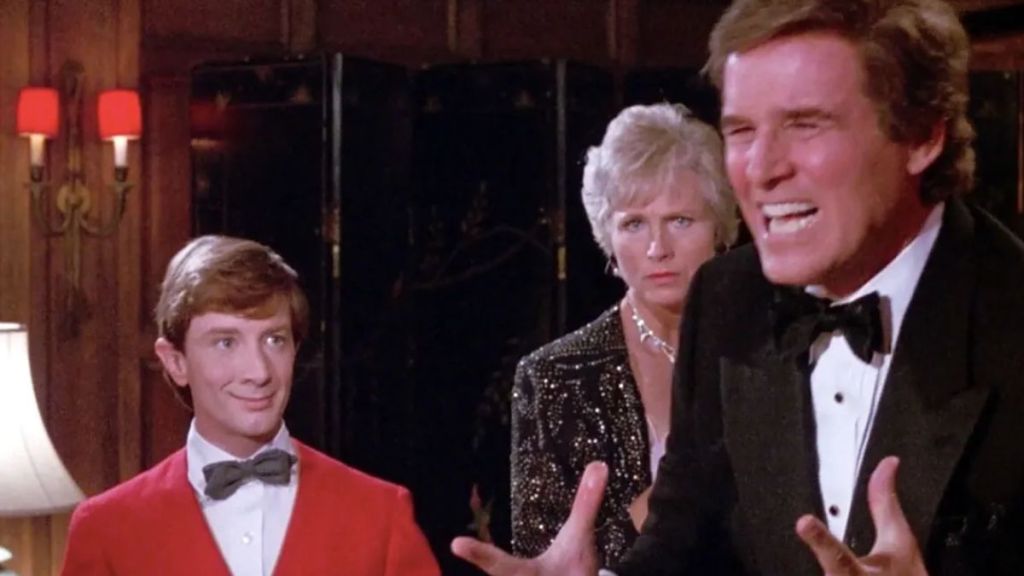
I absolutely love Clifford. I realize this puts me at odds with a considerable portion of the moviegoing public and seemingly everyone who reviewed the film when it was released, but I don’t care. Martin Short and Charles Grodin created one of the most outrageously funny comedies of the decade, a magnificent exercise in escalating psychological warfare that was unfortunately packaged and marketed as something resembling a family movie. I can only imagine the bewilderment of parents who brought their children to see what appeared to be a charming comedy about a mischievous ten-year-old boy, only to discover they’d purchased tickets to a feature-length nightmare about a manipulative little psychopath systematically destroying his uncle’s existence.
The central conceit is so ridiculous that it shouldn’t work: Martin Short, then a man in his forties, plays a ten-year-old child without the benefit of elaborate makeup, special effects, or any convincing physical transformation whatsoever. He’s simply Martin Short dressed as a little boy, behaving with the grotesque affectations of somebody who has only recently discovered what children are and has decided to imitate one for the amusement of an increasingly horrified audience. And that, I would argue, is precisely why it’s so funny. Clifford isn’t supposed to be a believable child. He’s a monstrous little gremlin whose single-minded obsession with visiting Dinosaur World brings him into conflict with his uncle Martin, played with characteristic impeccability by Charles Grodin, a man who mistakenly assumes he’s dealing with an ordinary human being. What follows is a sustained campaign of deceit, manipulation, sabotage, and psychological torture as Clifford systematically dismantles Martin’s professional and romantic life, all while wearing an expression of grotesque childhood innocence.
But the film’s secret weapon is Grodin, whose particular genius for deadpan exasperation finds its ultimate expression here. Grodin was one of the great comic actors of his generation, a performer capable of communicating extraordinary levels of irritation with the slightest movement of his face. Opposite Short’s deranged whirlwind of childish malevolence, he’s magnificent. Their scenes together are less like conventional comedy routines than elaborate contests of psychological endurance, with Grodin struggling desperately to preserve his dignity while Short cheerfully pushes him toward complete nervous collapse. The film works because both performers commit absolutely to the insanity. Short never softens Clifford into a lovable scamp, and Grodin never treats the situation as anything less than a horrifying personal catastrophe. It’s an inspired pairing, and the results are spectacular.
I suspect Clifford would have enjoyed a considerably better reputation had it been marketed as the black comedy it actually is. There’s very little traditionally heartwarming about the relationship between these characters, and that’s part of its appeal. It is a comedy about two people who absolutely cannot stand one another, performed by two enormously talented actors who understand that mutual hatred can be one of the funniest things in the world. If you’ve never seen it, disregard its reputation. Go watch Martin Short terrorize Charles Grodin for ninety minutes. It’s wonderful.
2. PCU (1994)
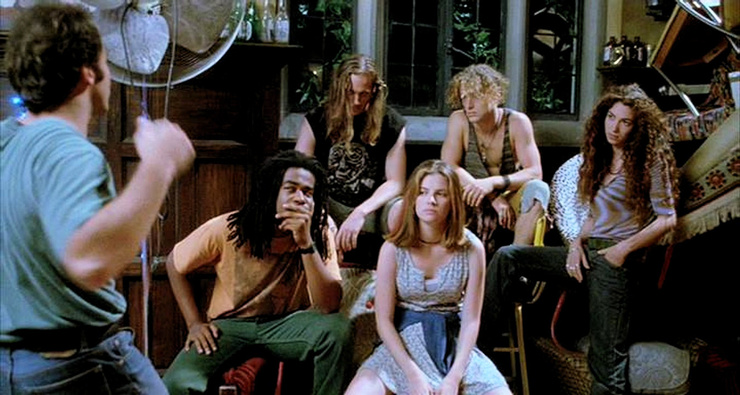
College campuses have always been fertile ground for comedy, largely because they’re populated by thousands of young adults enjoying their first extended experience of personal freedom while simultaneously demonstrating that they possess absolutely no idea what to do with it. Throw in student organizations, university administrators, campus politics, excessive drinking, and the various bizarre social rituals of American higher education, and you’ve got a marvelous setting for a movie. PCU takes all these ingredients, adds an enormous amount of 1990s cultural attitude, and produces a gloriously anarchic college comedy that deserves considerably more appreciation than it generally receives.
Jeremy Piven plays Droz, the resident ringleader of a campus house populated by social misfits, slackers, and enthusiastic practitioners of doing absolutely nothing productive. When a prospective student arrives for a visit, he’s introduced to a university where seemingly every social group has organized itself around some elaborate ideological grievance, personal identity, or recreational obsession. The film makes cheerful sport of campus political factions, administrative hypocrisy, and the earnest self-importance of people who’ve discovered a Cause and decided that everybody else must hear about it immediately. Droz, meanwhile, presides over his collection of degenerates with the confident assurance of a man who has figured out that college is considerably more enjoyable if you stop treating it as an institution of higher learning and start treating it as an elaborate social experiment with unlimited beer.
What I particularly enjoy about PCU is its infectious energy. Piven is terrific, delivering his dialogue with the sarcastic confidence of somebody who’s perpetually three steps ahead of everyone else, while the supporting cast of campus lunatics gives the fictional university a delightfully disreputable personality. David Spade is wonderfully obnoxious as the preppy antagonist, and Jon Favreau appears as Gutter, a character whose relationship with good judgment appears to have ended sometime during elementary school. George Clinton and Parliament-Funkadelic even turn up, providing a reminder that a college comedy involving a massive party should probably have some actual music worth hearing.
There’s also something rather fascinating about revisiting the film today, considering how much of its satire revolves around campus political culture and the absurdities of people dividing themselves into increasingly hostile social factions. But PCU isn’t particularly interested in offering a sophisticated political argument, nor should it be required to. Its real sympathies lie with people who just want to have a good time without being bothered by every self-appointed authority figure in the vicinity. It’s a cheerful, irreverent, occasionally very stupid comedy ("Can you blow me where the Pampers is?") about college as an institution where the education is frequently incidental to everything else. And sometimes that’s enough.
3. The Wrong Guy (1997)
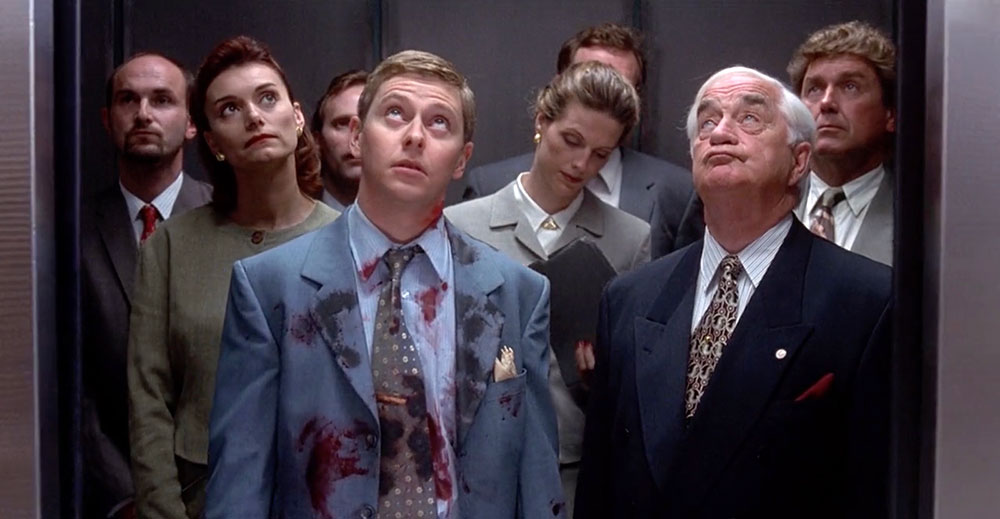
Every so often, somebody comes up with a comic premise so brilliantly simple that you wonder why nobody thought of it before. The Wrong Guy, a magnificent little Canadian comedy starring Dave Foley of The Kids in the Hall, begins with a man discovering his employer has been murdered. Unfortunately, Foley’s character, Nelson Hibbert, has recently suffered a humiliating professional disappointment and immediately concludes that the police will naturally suspect him of the crime. He flees the scene in a panic, beginning what he believes will be an exhausting struggle to clear his name and evade capture.
There’s just one little problem: the police already know who committed the murder. They have surveillance footage identifying the actual killer. Nobody suspects Nelson of anything. Nobody is looking for him. Nobody particularly cares where he goes. The entire fugitive adventure is taking place almost exclusively inside his own head.
This is such a wonderfully stupid idea for a movie that I can’t help admiring the brilliance of its construction. Most fugitive thrillers revolve around innocent people desperately attempting to prove their innocence while the authorities pursue them across the country. The Wrong Guy eliminates the pursuit entirely but allows its protagonist to continue behaving as though he’s starring in The Fugitive. Nelson concocts disguises, flees imaginary pursuers, becomes involved with strangers, and repeatedly interprets ordinary circumstances as evidence of a vast police operation closing in on him. The audience, meanwhile, enjoys the extraordinary luxury of knowing something the protagonist doesn’t: he’s a complete idiot, and virtually all of his problems are of his own making.
Dave Foley is absolutely perfect in the role. His performance combines the nervous energy of a man experiencing the worst day of his life with the peculiar confidence of somebody who believes he’s considerably more resourceful than he actually is. The movie is packed with inspired little absurdities and wonderfully deadpan performances, particularly from Colm Feore as the detective investigating the real crime. The police procedural and Nelson’s imaginary fugitive thriller proceed along parallel tracks, with neither side entirely aware of the other’s existence, producing an increasingly ridiculous succession of misunderstandings.
What makes The Wrong Guy special is that it never abandons the central joke or feels compelled to explain why the audience should find any of this funny. It simply follows its idiotic premise to its logical conclusion, discovering one marvelous variation after another along the way. It’s one of those movies where the sheer ingenuity of the comic construction becomes part of the pleasure. And it is, without exaggeration, one of the funniest comedies I’ve ever seen. If you haven’t encountered it, seek it out. It’s probably streaming free somewhere right now.
4. Kids in the Hall: Brain Candy (1996)
By the mid-1990s, the Canadian sketch-comedy troupe The Kids in the Hall had established themselves as some of the most inventive and gloriously peculiar comedians working in television. Their sketches frequently began with an ordinary social situation before wandering into increasingly bizarre territory, populated by an assortment of neurotic, pathetic, aggressive, and occasionally deeply unpleasant characters. When the troupe made the transition to feature films, the result was Brain Candy, an extraordinarily funny and surprisingly bleak satire about the pharmaceutical industry, corporate greed, and the distinctly American belief that every human problem can be solved if somebody manages to develop a sufficiently profitable product.
The story concerns a pharmaceutical company that develops a revolutionary antidepressant capable of producing extraordinary feelings of happiness. The drug, called Gleemonex, appears to solve one of the fundamental problems of human existence: misery. Unfortunately, this scientific breakthrough is placed in the hands of corporate executives whose principal interest in human happiness is determining how much money they can make from it. The resulting frenzy of publicity, commercialization, and increasingly alarming side effects provides the foundation for an elaborate parade of comic characters, with the Kids playing multiple roles and demonstrating their remarkable ability to transform themselves into virtually anybody, particularly if that person happens to be a complete lunatic.
What’s so wonderful about Brain Candy is the contrast between its relentlessly ridiculous comedy and its genuinely unpleasant observations about modern society. The movie understands the commercial appeal of effortless happiness, the vulnerability of people searching for emotional relief, and the extraordinary lengths corporations will go to protect a profitable product. Yet it never becomes a lecture. Instead, these ideas emerge through grotesque characters, elaborate absurdities, and the troupe’s peculiar talent for finding humor in situations that are often profoundly uncomfortable. There are moments of spectacular stupidity, but there’s also a surprisingly coherent satirical imagination behind the entire enterprise.
The film was a commercial disappointment, and its production was reportedly a difficult experience for the troupe, but none of that diminishes the finished product. Brain Candy is one of the rare sketch-comedy adaptations that successfully translates its creators’ distinctive sensibility into a feature-length story without sanding away all the strange edges that made them interesting in the first place. It’s caustic, imaginative, sometimes downright nasty, and frequently hilarious. In other words, exactly what you’d want from The Kids in the Hall.
5. The Ref (1994)
Christmas movies generally concern the importance of family, forgiveness, generosity, and rediscovering the simple pleasures of spending time with the people you love. Apparently nobody told the filmmakers responsible for The Ref, a gloriously hostile holiday comedy in which a burglar takes a married couple hostage and gradually discovers that their relationship is so catastrophically dysfunctional that he may actually be the most emotionally stable person in the house.
Denis Leary plays Gus, a professional thief whose attempt to rob a wealthy home on Christmas Eve goes spectacularly wrong. Desperate to evade the police, he takes a couple hostage, expecting them to cooperate while he figures out how to escape. Unfortunately, the couple in question are Lloyd and Caroline Chasseur, played by Kevin Spacey and Judy Davis, whose marriage has deteriorated into a relentless campaign of mutual resentment, sarcasm, recrimination, and psychological warfare. They simply cannot stop fighting. Not when there’s a criminal threatening them with a gun, not when their family arrives for the holidays, and apparently not under any circumstances short of one of them dropping dead. Before long, Gus has been transformed from a dangerous hostage-taker into an unwilling marriage counselor, attempting to impose basic standards of civility upon two people who seem determined to spend the remainder of their lives making each other miserable.
The performances are magnificent. Leary’s trademark profane exasperation is perfectly suited to a character who begins the movie believing himself to be the dangerous individual in the room and gradually realizes he’s stumbled into a situation far beyond his professional capabilities. Spacey and Davis are equally wonderful as the battling spouses, their exchanges possessing the extraordinary specificity of people who have spent years carefully identifying one another’s emotional weaknesses. There’s also a terrific supporting cast of family members, all contributing their own particular varieties of selfishness, hypocrisy, and holiday unpleasantness.
But beneath the insults and screaming is a surprisingly perceptive little movie about the ways people damage their relationships through years of accumulated grievances. The characters are funny precisely because their behavior is recognizable, even when exaggerated to absurd extremes. Family gatherings have an unfortunate tendency to revive conflicts that everybody thought they’d resolved decades earlier, and The Ref understands this phenomenon beautifully. It’s a Christmas comedy for anyone who’s ever sat through a holiday dinner wondering whether setting the house on fire might be the quickest way to end the evening. And for all its venom, there’s a genuine emotional core beneath the hostility, which makes the movie considerably more rewarding than another ninety minutes of people exchanging insults. Although the insults are pretty damned funny.
6. Quick Change (1990)
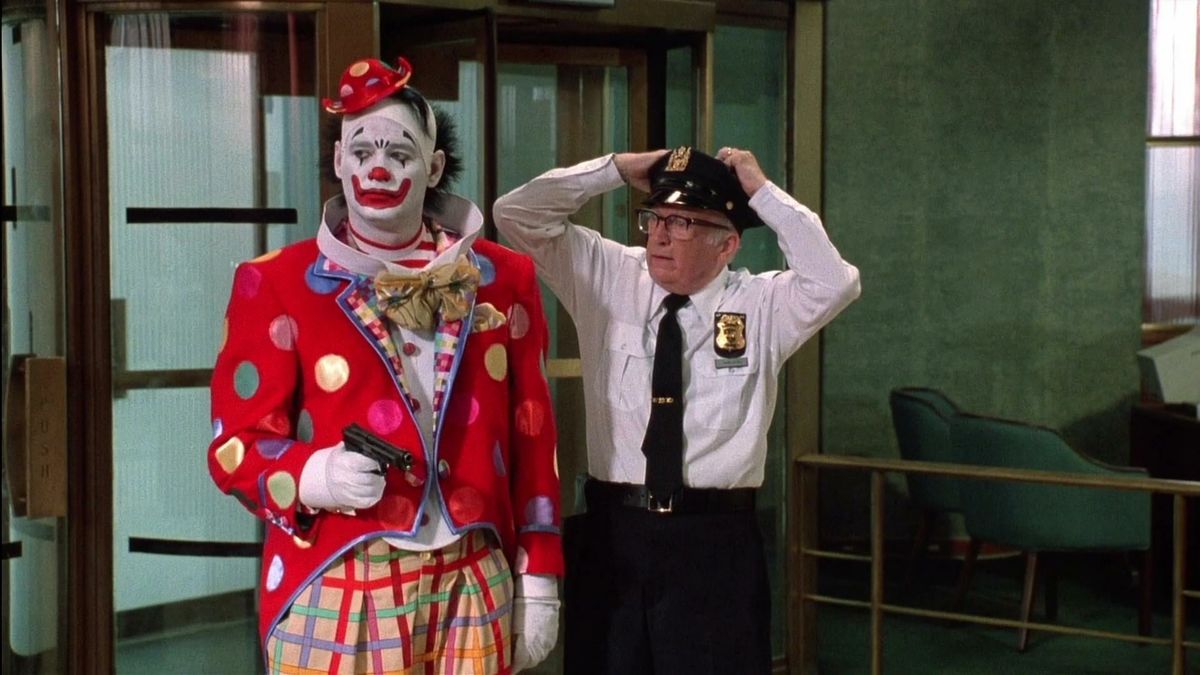
Quick Change begins with an almost perfect bank robbery. Bill Murray enters a Manhattan bank dressed as a clown, takes the employees and customers hostage, and executes an elaborate scheme that allows him and his accomplices to escape with a substantial amount of money. It’s a beautifully orchestrated crime, conceived and carried out by people who have apparently thought of everything. There’s only one small detail they failed to anticipate: getting out of New York City.
And so begins one of the funniest exercises in sustained frustration ever committed to film, as Murray and his partners, played by Geena Davis and Randy Quaid, discover that escaping Manhattan is considerably more difficult than robbing a bank. Every conceivable urban inconvenience conspires against them. Traffic, transportation, bureaucracy, bizarre strangers, unexpected complications, and the seemingly limitless indifference of New York’s inhabitants gradually transform a successful criminal operation into an exhausting struggle for survival. What should have been a straightforward journey to the airport becomes a surreal odyssey through a city that appears to resent the very existence of anybody attempting to leave it.
Murray, who also co-directed the film with Howard Franklin, is magnificent as Grimm, a criminal whose carefully maintained composure slowly deteriorates beneath the accumulated weight of metropolitan stupidity. His particular brand of deadpan disgust has rarely been put to better use, and the movie’s escalating absurdities provide him with an apparently inexhaustible supply of opportunities to express his contempt for humanity. Davis brings much-needed intelligence and emotional perspective to the proceedings, while Quaid plays an accomplice whose contributions to the operation frequently consist of creating entirely new problems for everyone else. Their increasingly strained relationship becomes a miniature comic portrait of three people discovering that even the most carefully planned endeavor can be destroyed by forces beyond human comprehension.
What I especially love about Quick Change is its depiction of New York City as an almost supernatural antagonist. The city itself seems determined to prevent these people from escaping, subjecting them to one bizarre encounter after another while remaining completely indifferent to their mounting desperation. It’s a wonderful comic portrait of urban life, capturing the peculiar experience of living in a place where millions of people occupy the same limited space and somehow manage to make even the simplest undertaking unnecessarily complicated. The movie is funny because the situations are ridiculous, but also because anybody who’s spent enough time in a major American city can recognize the essential truth beneath the exaggeration. Sometimes getting across town really does feel harder than robbing a bank.
7. Free Enterprise (1999)
It’s difficult to remember now, when Hollywood seems to exist almost exclusively to manufacture superhero movies, science-fiction franchises, comic-book adaptations, and increasingly elaborate exercises in brand recognition, but there was once a time when being an adult obsessed with this stuff was considered a little unusual. Certainly there were millions of fans, conventions, specialty shops, and thriving communities devoted to science fiction and fantasy, but the popular stereotype of the dedicated fan was still that of a socially awkward obsessive living somewhere on the margins of mainstream culture. Free Enterprise, a wonderful independent comedy released in 1999, arrived at almost exactly the moment before that stereotype began its transformation into the dominant American entertainment consumer.
The film follows Robert and Mark, played by Rafer Weigel and Eric McCormack, two thirtysomething men whose lives have been profoundly shaped by a lifelong obsession with popular culture, particularly Star Trek. They possess an enormous amount of knowledge about movies, television, comics, and science fiction, but somewhat less expertise in the ordinary business of being functioning adults. Their romantic relationships are complicated, their personal ambitions are frequently frustrated, and they spend an alarming amount of time discussing fictional characters and debating the finer points of entertainment that most people would probably consider recreational rather than existential. Then, through a remarkable coincidence, they encounter William Shatner, the legendary Captain Kirk himself, and discover that the man they’ve spent their lives idolizing is considerably more peculiar than they ever imagined.
Shatner is absolutely wonderful, cheerfully sending up his own public persona while portraying a fictionalized version of himself whose ambitions include staging a musical adaptation of Shakespeare’s Julius Caesar. It’s an inspired comic performance, particularly because Shatner seems perfectly willing to embrace the absurdities of his own celebrity and the occasionally embarrassing devotion of his fans. But the film’s greater achievement lies in its genuine affection for Robert and Mark, two men who are frequently ridiculous without ever becoming merely pathetic. Their enthusiasm for movies and television isn’t treated as something inherently shameful or immature. It’s a meaningful part of who they are, a shared language through which they understand the world and their place in it.
And that’s what makes Free Enterprise so appealing. It’s a movie about the joy of loving popular culture, the peculiar communities that form around shared enthusiasms, and the sometimes difficult process of reconciling those interests with the practical responsibilities of adulthood. There’s a little bit of affectionate mockery, certainly, but there’s also a great deal of understanding. The movie never suggests that growing up requires abandoning the things that brought you happiness when you were younger. Considering how much of my own life has revolved around movies, television, and the odd cultural artifacts that accumulate in one’s memory over decades, I find that sentiment rather wonderful.
8. The Man Who Knew Too Little (1997)
There are few things funnier than somebody maintaining absolute confidence in a situation they completely misunderstand. The Man Who Knew Too Little takes this premise to an almost magnificent extreme, placing Bill Murray in the middle of an international espionage conspiracy while allowing him to believe that he’s simply participating in an elaborate interactive theatrical performance. Everybody around him is attempting to negotiate, deceive, manipulate, or murder one another. Murray, meanwhile, is having the time of his life.
Murray plays Wallace Ritchie, an American visiting his brother in London who signs up for a participatory theatrical experience called the Theatre of Life. Through a series of coincidences and mistaken identities, Wallace becomes entangled in an actual espionage operation involving spies, assassins, and international intrigue. Unfortunately, he believes that everything happening around him is part of the show, interpreting genuine threats against his life as particularly convincing theatrical performances. Armed with this completely erroneous understanding of his circumstances, Wallace cheerfully stumbles through an increasingly dangerous conspiracy, frequently succeeding where trained intelligence professionals fail simply because he has absolutely no idea what’s going on.
The brilliance of the movie lies in Murray’s performance. Wallace isn’t necessarily an idiot, although he certainly possesses a remarkable capacity for misunderstanding the obvious. Rather, he’s a man who has accepted a particular explanation for his circumstances and proceeds to interpret everything through that framework, regardless of how alarming the evidence becomes. A threatening stranger is simply a talented actor. An attempted assassination is an exciting piece of theatrical improvisation. A complicated intelligence operation is an unusually elaborate entertainment package that he intends to enjoy thoroughly, having presumably paid good money for the privilege. Murray’s cheerful enthusiasm makes him wonderfully endearing, particularly as the increasingly bewildered villains attempt to determine whether they’re dealing with a criminal mastermind or the most spectacularly incompetent spy in human history.
It’s particularly interesting alongside The Wrong Guy, another comedy about a protagonist whose understanding of reality bears almost no relationship to what’s actually happening. But whereas Dave Foley’s character believes himself to be the hero of a dangerous thriller that doesn’t exist, Murray’s Wallace really is involved in a dangerous thriller and believes he’s acting in a comedy. Both films understand the extraordinary comic possibilities of dramatic irony, allowing the audience to enjoy an entirely different interpretation of events from the characters experiencing them. The Man Who Knew Too Little is lighthearted, energetic, and enormously entertaining, a wonderful example of how far a simple comic premise can go when placed in the hands of a performer who knows exactly what to do with it.
9. Stuart Saves His Family (1995)
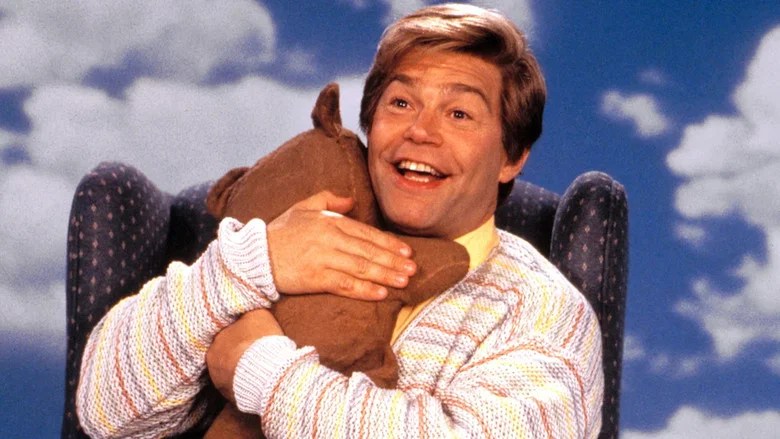
I’m not entirely certain that Stuart Saves His Family is a movie everybody will find funny. In fact, I suspect its particular brand of comedy may be significantly more amusing, and considerably more affecting, to people who have actually experienced the sort of family dysfunction it depicts. If you grew up in a reasonably happy household where everybody communicated honestly, respected one another’s boundaries, and generally managed to conduct themselves like civilized human beings, congratulations. I’m delighted for you. Thrilled, even. You may find this movie mildly amusing. For anybody who grew up around alcoholism, codependency, emotional manipulation, endless family arguments, or the exhausting spectacle of people repeatedly sabotaging their own lives while insisting that everyone else is responsible for their problems, however, Stuart Saves His Family may occasionally resemble a documentary. Or an increasingly unnerving mirror.
Al Franken reprises his Saturday Night Live character Stuart Smalley, the relentlessly earnest self-help enthusiast whose daily affirmations and therapeutic vocabulary made him one of the more peculiar recurring characters in the show’s history. What could easily have become another dreadful attempt to stretch a five-minute sketch into a feature-length comedy instead develops into something surprisingly intelligent and emotionally perceptive. Stuart loses his public-access television program and returns to his troubled family, where he attempts to apply everything he’s learned through years of therapy and recovery programs to a group of people who have absolutely no interest in examining their own behavior. His father is an alcoholic, his mother has spent much of her life accommodating the family’s dysfunction, and his siblings struggle with their own problems. Stuart, meanwhile, believes that with enough patience, understanding, carefully applied therapeutic terminology, and cheerful affirmations, he can somehow fix everything.
Of course he can’t. And that’s where the movie becomes both genuinely funny and unexpectedly heartbreaking. Stuart’s family possesses the remarkable ability to transform virtually any interaction into an opportunity for emotional chaos, reviving old grievances, assigning blame, refusing responsibility, and dragging one another back into familiar patterns of dysfunction. Anyone who’s experienced this sort of environment will recognize the circular arguments, the impossible expectations, the theatrical displays of wounded innocence, and the extraordinary frustration of attempting to reason with people who have spent decades perfecting the art of avoiding responsibility. Franken is wonderful as Stuart, whose sincere attempts at self-improvement are frequently undermined by his own limitations and his inability to accept that other people cannot simply be repaired through sufficient enthusiasm. Harold Ramis directs with a surprisingly gentle touch, allowing the comedy to emerge from recognizable human behavior rather than forcing the characters into increasingly ridiculous situations.
What I appreciate most about Stuart Saves His Family is its refusal to treat emotional recovery as either a miracle cure or a ridiculous affectation. Stuart’s earnestness is frequently funny, and his therapeutic language can become absurd, but the movie never suggests that his desire to become a healthier, more compassionate person is something to be ashamed of. Indeed, his determination to break free from the destructive patterns of his upbringing may be the most admirable thing about him. The film understands that loving your family doesn’t necessarily mean being able to save them, and that sometimes the most difficult thing a person can do is accept the limits of their responsibility for other people’s happiness. That’s a surprisingly profound observation for a comedy derived from a recurring Saturday Night Live sketch. But it’s also a genuinely funny movie, provided you possess the appropriate sense of humor. And perhaps a sufficiently complicated family history.
10. Crazy People (1990)
Advertising is a remarkable profession. Entire corporations employ thousands of highly educated, well-compensated professionals whose principal responsibility is convincing the public that purchasing some particular product will make their lives substantially better, even when the product in question is a breakfast cereal, an automobile, a household appliance, or some other perfectly ordinary commodity that has absolutely no relationship to human fulfillment. The industry has developed a vast and extraordinarily sophisticated vocabulary devoted to transforming mundane consumer products into objects of desire, and the public has generally accepted this arrangement despite knowing perfectly well that much of what they’re being told is complete bullshit. Which raises an interesting question: what would happen if an advertising executive suddenly decided to tell the truth?
That’s the wonderfully inspired premise of Crazy People, a 1990 comedy starring Dudley Moore as Emory Leeson, a successful advertising executive whose increasing disillusionment with the industry’s dishonesty leads him to begin creating brutally truthful advertisements. Instead of promising consumers a magical transformation in their personal lives, his campaigns simply describe the products being sold, frequently with a degree of candor that would ordinarily result in somebody being escorted out of the building by security. His colleagues become convinced that he’s suffering from a nervous breakdown, and Emory eventually finds himself in a psychiatric hospital, where he begins collaborating with the other patients on an increasingly outrageous collection of advertising campaigns. The extraordinary twist is that the advertisements become enormously successful. Apparently the American public has been waiting for somebody to stop insulting its intelligence.
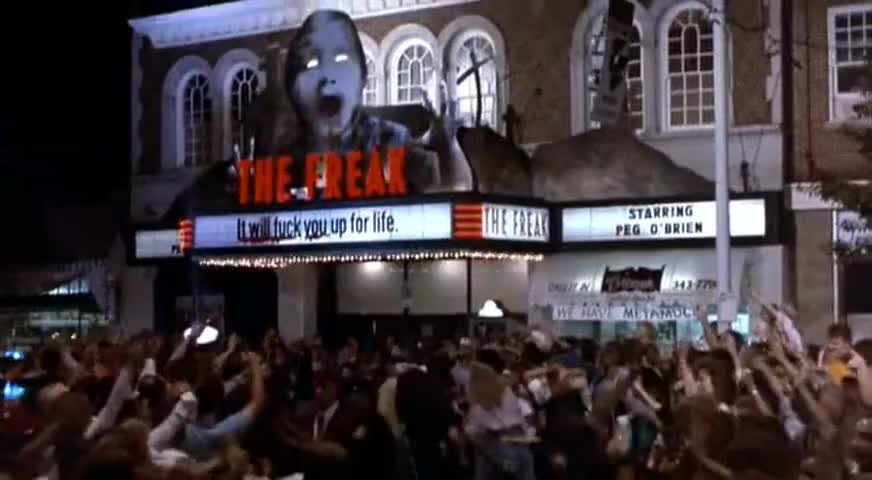
And the advertisements themselves are magnificent. Volvo manufactures automobiles that aren’t particularly sexy, but are solid and dependable. United Airlines manages to deliver most of its passengers to their destinations alive. The tourism industry promotes New York City by observing that its murder rate has improved. But my absolute favorite involves a fictional horror film called The Freak, whose advertising promises prospective audiences that the experience won’t merely frighten them but will profoundly fuck them up for the rest of their lives. It’s one of the funniest movie advertisements I’ve ever encountered, made considerably better by the sight of that magnificent promise plastered across the marquee of an actual movie theater. The sheer magnificence of the joke is that the advertisement probably would work. I’d certainly be curious to see a horror movie whose marketing department openly promised psychological damage.
What makes Crazy People particularly appealing, however, is that the film possesses genuine affection for the people society has dismissed as mentally unwell. Emory’s fellow patients are frequently portrayed through broad comic exaggeration, certainly, but they’re also creative, enthusiastic, and capable of insights that the supposedly normal professionals running the advertising industry seem unable to comprehend. Daryl Hannah brings considerable warmth to the film, while the supporting cast contributes a wonderful assortment of eccentric personalities. The entire enterprise has a cheerful, slightly anarchic quality, as though somebody decided to combine a Hollywood romantic comedy with an extended exercise in dismantling the entire American advertising industry.
And perhaps that’s why I’ve always loved Crazy People. Beneath all the ridiculous advertisements and profanity is a rather sweet suggestion that honesty, creativity, and human connection are considerably more valuable than the carefully manufactured nonsense we’re constantly encouraged to consume. It’s also a movie in which some of the funniest jokes consist of simply telling the truth, which is a remarkable achievement when you consider how much effort the entertainment industry generally expends attempting to avoid it. I don’t know whether Crazy People could be made today, considering the sensitivity of modern corporations about their carefully cultivated public images, but I’m grateful it exists. Any movie that can make me laugh uncontrollably at an advertisement for a fictional horror film deserves a permanent place in my collection.


Leave a Reply